





InnovationRewards & PayoutsPartners
How SELLIT9 Trade Drives Online Sales and In-Store Foot Traffic
SELLIT9 Trade turns old devices into instant store credit, lifting online conversion and driving foot traffic, from one platform and one pricing engine.
By Josh Guttman, CEO of SELLIT9
SELLIT9 Trade is one program that drives sales everywhere a customer meets your brand.
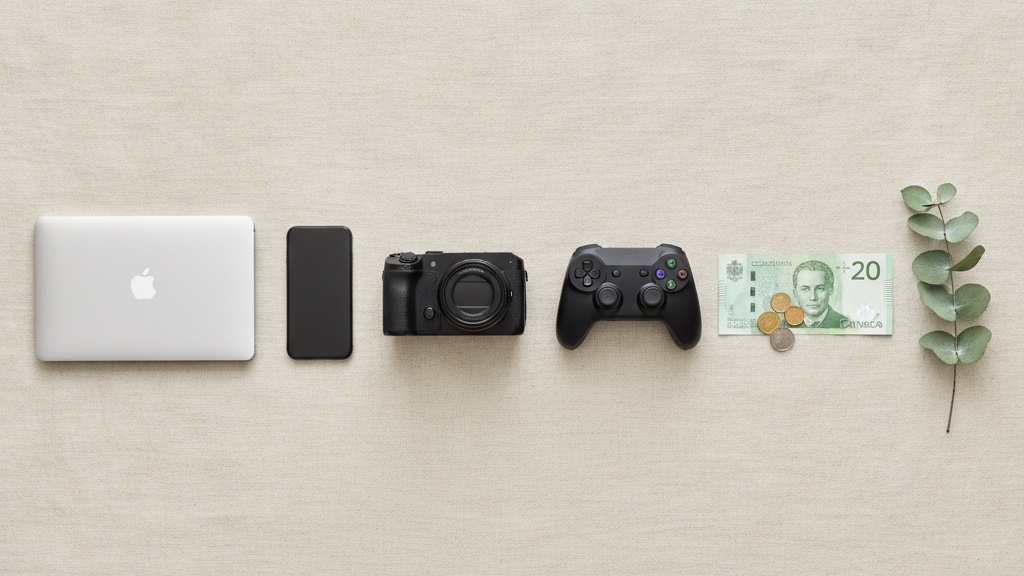
SELLIT9 Trade is a conversion and purchasing-power strategy: a customer trades in a used phone, tablet, laptop, camera, or gaming console and gets store credit issued immediately toward a purchase. Online, in store, or both. The credit can land in their inbox on the spot, whether they're on your site or standing at your counter, so there's no waiting and nothing for staff to activate by hand. It's funded by the traded-in item, so the customer's buying power goes up without the merchant discounting. The merchant sells at full price and is reimbursed for the store credit (net of a small merchant discount rate on the credit value, covered below); SELLIT9 handles the item, the resale, and all the risk.
Most merchants meet SELLIT9 Trade online first. Partly because that is where budget hesitation quietly kills the most sales, and partly because the product page is the natural place for it to live, right alongside BNPL. A trade-in prompt on a product page or in an abandoned cart email turns "I can't quite afford this" into "I can put my old laptop toward it." But the same program, same pricing engine, same instant credit, runs at the counter on an iPad, where it does something an online widget can't: it pulls people physically into the store and converts that visit into a basket.
That is the point worth sitting with. SELLIT9 Trade isn't only an online tool with an in-store bolt-on, or a retail program someone ported to the web. It is one program that drives online conversion and in-store foot traffic from a single source of truth. Retail already knows trade-ins work, Apple, Best Buy, and GameStop built them into the buying cycle. The numbers agree: 84% of consumers say a competitive trade-in offer makes them more likely to return to the same retailer.
There's a second difference that matters just as much. Those first-party programs only take what they themselves can resell. An Apple Store takes Apple products, a phone retailer takes phones. SELLIT9's logistics engine lifts that ceiling: a store can accept trades far beyond its own catalogue. A customer walking into an Apple Store could trade in an old MacBook and a Nikon camera toward a more powerful MacBook, because SELLIT9 prices, collects, and resells both. The store still chooses which categories it wants to keep for itself (if any at all), but it's no longer limited to accepting only what it can move. What's changed is that one platform now delivers all of this across every channel a customer touches.
How does trade-in credit drive online sales?
Online, SELLIT9 Trade attacks the exact moment a sale falls apart: the customer wants the product but the price is more than they planned to spend. Trade-in credit closes that gap without a discount, by converting something the customer already owns into purchasing power.
It isn't confined to the product page. The trade-in offer can surface across the journey:
Product pages are the primary placement. The widget sits beside the price and add-to-cart button, showing the customer they can reduce their out-of-pocket cost by trading in something they own.
Abandoned cart recovery emails carry the highest-intent version of the prompt: "Still thinking about that PS5? Trade in your old console for instant credit toward it." It re-frames a checkout the customer abandoned on price.
Landing pages and campaign pages can embed the widget to power a promotion, "Trade in your old laptop and upgrade this month."
Retargeting flows use trade-in value as the hook to bring a customer back: "Your old iPad could be worth $180 toward this purchase."
The mechanics for the customer take under a minute: they're directed to a merchant-branded trade-in page hosted by SELLIT9, answer a few condition questions, get a real-time market quote, and the credit is issued immediately. No waiting period, no approval delay. They pay the difference through normal checkout and ship the traded-in item with a prepaid label afterward. The effect on the merchant's numbers is twofold: more carts convert, and average order value rises, because a customer holding credit tends to trade up to the higher-spec model.
How does the same program drive in-store sales and foot traffic?
In a physical store, SELLIT9 Trade does something the online widget structurally cannot: it gives people a reason to walk in that has nothing to do with what's on your shelves, and everything to do with what's in their drawers.
The average American home holds around 24 electronic items, many unused. In the UK alone, an estimated 55 million old phones sit idle in homes. Each one is a store visit waiting for a trigger, and a trade-in offer is that trigger. Once the customer is inside, three dynamics turn the visit into revenue:
Credit gets spent where it's issued, and then some. Trade-in value issued as store credit behaves like a gift card, and gift card economics are well documented: 61% of people redeeming a gift card spend more than the balance on it, and among those who overspend, the extra spending averages $108. A customer who trades an old iPhone for $180 in credit doesn't leave with $180 of product. They leave with more, having happily paid the difference.
Households have more than one item. A good first trade-in experience brings the customer back with the old tablet, then the console, then the laptop. Each return is a fresh visit with fresh credit to spend.
The upgrade cycle is a return ticket. Electronics buyers replace what they own on a predictable cadence. The store that took their trade-in last time is the one they think of next. For a category where repeat purchase rates run as low as 10–15% because of long replacement timelines, trade-ins are one of the few levers that reliably pulls customers back.
It works at the counter the same way it works online. On an iPad, with the same pricing engine. The customer (or an associate) opens the trade-in flow, answers a guided condition questionnaire, gets an instant market-priced quote, and store credit is issued immediately. No manual appraisal, no manual gift card issuance, no waiting. The store hands the item to SELLIT9 with prepaid shipping materials and never grades, stocks, or resells an item.
The foot-traffic logic is the same one kiosk operators built businesses on: ecoATM reports that 70% of the cash it pays out at its machines gets spent in the host store. SELLIT9 has an edge there. Store credit doesn't even give the money a chance to leave the building.
Why does running one program across both channels matter?
Because customers don't shop in one channel, and a trade-in program fractured across two systems leaks value at every seam.
When the same SELLIT9 program runs online and in store, the pricing is identical everywhere, so a customer who gets a $180 quote on your site sees $180 at the counter. No "the website said something different" friction. The experience is continuous: a customer can start a trade online and finish it in store, or trade in store and discover they can do it again from home. And the merchant runs one integration, one pricing source, and one settlement model instead of stitching together a web widget and a manual register process that never quite agree.
For an omnichannel retailer, that consistency is the difference between a trade-in being a gimmick in one channel and being a purchasing-power strategy across the whole business.
What makes manual in-store trade-in programs so hard to run?
If trade-ins work so well, why doesn't every store offer them? Because the manual version asks floor staff to be appraisers, market analysts, and resale managers on top of their actual jobs, and that's the part that breaks.
Valuation depends on whoever is behind the counter. Used electronics prices move constantly. Staff quoting from memory or a printed sheet either overpay (margin loss) or lowball (lost customer). Two associates can quote the same item differently on the same day.
Gift card issuance is manual and error-prone. Someone keys in the amount, activates the card, logs the trade, and reconciles it later. Every step invites mistakes, and at busy times it builds a queue.
The store inherits the inventory. Once the item crosses the counter it's the store's problem: grading, data wiping, storage, refurbishment, finding a resale channel, and eating the loss when the market moves or the item doesn't sell.
Depreciation risk sits on the store's books. Used electronics lose value every week they sit in a back room.
Training never ends. New models launch constantly, and every launch resets what staff need to know about identification, grading, and pricing.
This is why stores that do offer manual trade-ins quietly throttle them. Narrow categories, conservative quotes, certain registers, certain hours. The economics of the program get strangled by the operations of the program. SELLIT9 Trade removes the operations, which is what lets the economics actually show up.
Manual trade-in program vs. SELLIT9-powered: a comparison
| Manual trade-in program | SELLIT9 Trade | |
|---|---|---|
| Valuation | Staff judgment, printed sheets, inconsistent | Live market pricing, identical online and at every register |
| Credit issuance | Manual gift card activation and logging | Issued immediately, automatically |
| Staff training | Continuous. Every new model resets it | A guided flow anyone can run on day one |
| Inventory | Store grades, stores, refurbishes, resells | SELLIT9 collects, inspects, and resells |
| Depreciation risk | On the store's books | Carried entirely by SELLIT9 |
| Online channel | Usually none | Product pages, cart emails, landing pages, retargeting |
| In-store hardware | Whatever you've cobbled together | An iPad at the counter |
What does the merchant actually pay?
The merchant pays a merchant discount rate (MDR) on the trade-in credit value. The same fee structure BNPL providers use, with one meaningful difference: the base.
With BNPL, the MDR (typically 2–8%) is charged on the entire purchase. If a customer buys a $1,299 laptop on installments, the fee applies to all $1,299.
With trade-in credit, the MDR applies only to the credit portion. If that $1,299 laptop purchase includes a $400 trade-in credit, the fee base is $400, not $1,299. The customer-paid portion clears through standard checkout (online) or your standard point of sale (in store) at normal processing rates.
| BNPL | Trade-in credit | |
|---|---|---|
| Fee structure | MDR on the entire order | MDR on the trade-in credit only |
| Example: $1,299 laptop, $400 credit | MDR calculated on $1,299 | MDR calculated on $400 |
| Customer-paid portion | Spread across installments | Clears through standard checkout same day |
And unlike a manual program, there's no second cost hiding behind the first. No labour hours spent appraising, no shrinkage on misquoted items, no write-downs on unsold inventory. The MDR is the cost, and it only exists when a trade-in funds a sale.
Can my store also become a drop-off depot?
Yes. Stores with logistics capacity can go a step further and serve as SELLIT9 drop-off depots.
SELLIT9 processes trade-ins from online customers across its merchant network, and most of those items travel by prepaid shipping label. A depot store offers those customers a second option: drop the item off in person instead of boxing it up and shipping it. Every drop-off is a visitor who chose your location, walked your floor, and associates your store with getting paid, and many of them were never your customers before. It's the same foot-traffic logic that makes hosting recycling kiosks attractive to grocery chains and big-box retailers, except the "kiosk" is your existing counter and the program is one you already run.
The depot role suits stores with the logistics resources to batch and forward received items. Back-of-house space, regular outbound shipping, staff who can log a hand-off. If that's your operation, the depot turns infrastructure you already pay for into a traffic channel.
What items can customers trade in?
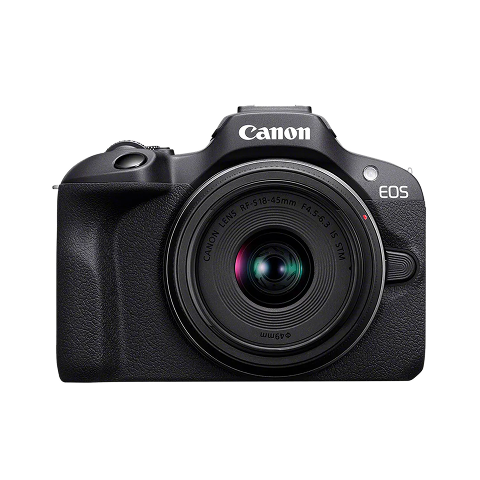
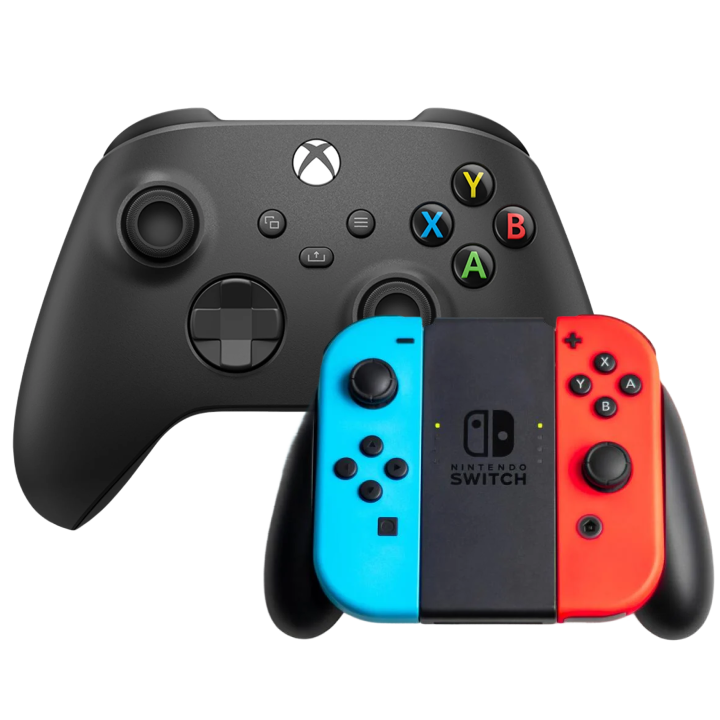
SELLIT9 Trade supports consumer electronics: phones, tablets, laptops, cameras, gaming consoles, and accessories, and the list of accepted categories keeps expanding. These categories have the deepest recommerce markets and the most reliable real-time pricing data, which is what makes instant, accurate quotes possible whether the customer is on your site or at your counter.
The trade-in doesn't need to match the purchase. A customer can hand over an old phone and put the credit toward a camera, or trade a console and a tablet toward a laptop. Any supported item generates credit toward anything in your store.
There's a market reason this matters now. The global refurbished electronics market was valued at roughly $68 billion in 2026 and is projected to double by 2033. Every traded-in item feeds that market instead of a landfill, which makes a SELLIT9 trade-in program a visible, working sustainability story, not a poster in the break room.
How to add SELLIT9 Trade to your store
SELLIT9 Trade is available as a native integration for all major ecommerce platforms, and online setup takes under five minutes. No developer required. The widget is live on the Shopify App Store with a five-star rating, available as an Adobe Commerce / Magento extension, and supported on all ecommerce platforms with literally one line of code. Five minutes of setup is all it takes to give every customer a new form of purchasing power.
The same program runs in store on an iPad with no special hardware, and stores with logistics resources can participate as drop-off depots. All part of the same conversation. To get started, visit sellit9.com/merchants. To see the brands you'd be in the company of, take a look at sellit9.com/trade.
Frequently asked questions
How does SELLIT9 Trade drive online sales?
It closes the gap between what a customer wants to buy and what they planned to spend, without a discount. The customer trades in an item they already own and gets store credit issued immediately toward the purchase. Online, the offer can appear on product pages, abandoned cart recovery emails, landing pages, and retargeting flows. Lifting both conversion and average order value.
How does the same program drive in-store sales and foot traffic?
A trade-in offer gives people a reason to come in that doesn't depend on a promotion: the unused electronics, and a growing list of other accepted categories, sitting in their homes. The average US home holds around 24 items. Once inside, the credit is issued immediately and behaves like a gift card, 61% of redeemers spend more than the balance, averaging $108 in overspend, so the visit converts into a basket.
Is it the same program online and in store?
Yes. SELLIT9 Trade runs on one platform and one pricing engine across both channels. A quote a customer sees online matches what they'd see at the counter, and the merchant runs a single integration rather than separate web and register systems.
Does my staff need training to run in-store trade-ins?
No appraisal training. The iPad flow guides the associate (or the customer) through identifying the item and answering structured condition questions. Pricing comes from live recommerce market data, so every register quotes the same item the same way the website does.
Who takes the traded-in items?
SELLIT9 does. Online and in store. The customer ships the item with a prepaid label, or hands it over at the counter for SELLIT9 to collect. SELLIT9 inspects, refurbishes, and resells, and carries all the inventory risk, including depreciation and unsold items. Merchants who want certain categories for their own use can opt in.
What does the merchant pay?
A merchant discount rate (MDR) on the trade-in credit value only. On a $1,299 sale with a $400 trade-in credit, the fee base is $400. The remaining $899 clears through standard checkout or point of sale at normal rates. BNPL, by comparison, charges its MDR on the full $1,299.
What items can customers trade in?
Consumer electronics: phones, tablets, laptops, cameras, gaming consoles, and accessories, and an ever-expanding list of categories. The traded item doesn't need to match what the customer buys.
What is a drop-off depot?
A participating store where SELLIT9's online trade-in customers can drop off their items in person instead of shipping them. Depots suit stores with back-of-house logistics capacity, and every drop-off brings a visitor, often a brand-new one, through the door.
How long does it take to set up?
Online setup takes under five minutes on all major platforms with no developer required. The in-store flow runs on an iPad with no special hardware.
Sources
- Total Retail: 84% of consumers say a competitive trade-in offer makes them more likely to return to the same retailer; only 61% of U.S. smartphone buyers were offered a trade-in at purchase. Could Device Trade-Ins Be Retail's Most Underutilized Sales Tool?
- Capital One Shopping Research: 61% of people redeeming gift cards spend more than the card's balance; among those who overspend, the extra spending averages $108. Gift Card Statistics (2026)
- Earth911. The average American home holds roughly 24 electronic items. Electronics: The Fastest-Growing Waste Stream in Your Home
- Envirofone. An estimated 55 million unused phones sit idle in UK homes. How Many Phones End Up in Waste Each Year?
- Coherent Market Insights. The global refurbished electronics market was valued at ~$68.2B in 2026, projected to reach ~$136.4B by 2033. Refurbished Electronics Market Size and Analysis, 2026–2033
- Opensend, Electronics and high-ticket categories see repeat purchase rates of 10–15% due to long replacement timelines. 7 Repeat Purchase Rate Statistics for Ecommerce Stores
- ecoATM B2B Blog, Kiosk operator ecoATM reports 70% of cash dispensed at its kiosks is spent in the host store. How ecoATM Kiosks Boost Foot Traffic and Drive Repeat Visits