



We Don't Need Better Frontends Anymore, We Need Less Frontend
Users do not want to learn new interfaces. They want to get things done in the AI tools they already use, with commerce as invisible infrastructure.

We Don't Need Better Frontends Anymore, We Need Less Frontend
How AI-first interfaces are reshaping commerce, trade-ins, and the future of user experience
People don't wake up wanting to learn a new user interface. They wake up wanting to get something done, using whatever tool they already live in.
That simple truth is driving a fundamental shift in how we think about software design, customer experience, and digital commerce. At SELLIT9, we're not just observing this shift; we're testing it in real time.
The Experiment: Claude AI as a Trade-In Interface
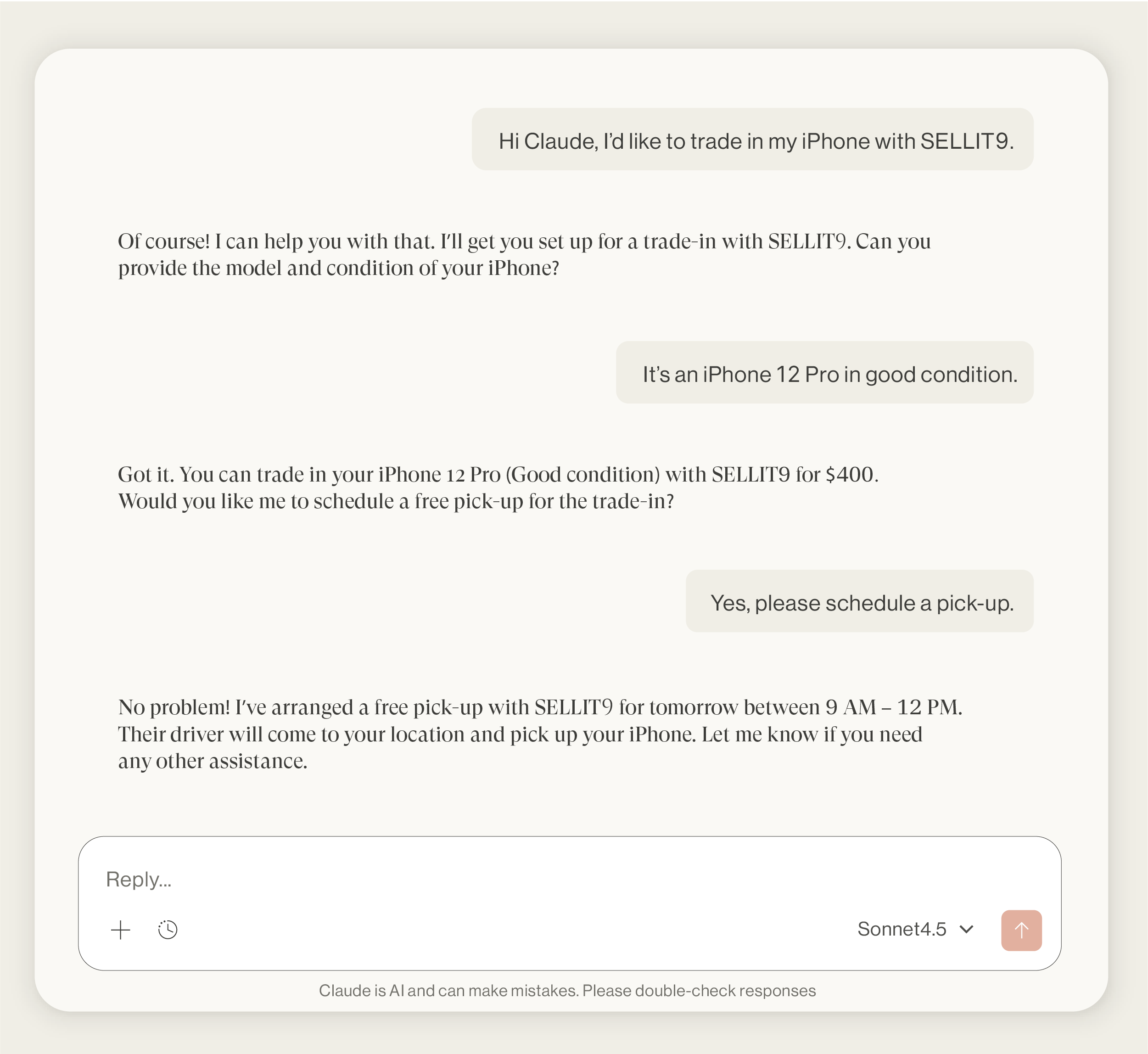
We recently ran an experiment at SELLIT9 where we let Claude AI become the interface to book a trade-in.
No app download required, just tell us what you want, and we'll make it happen.
The results? Users could complete trade-ins without learning our platform, without navigating menus, and without friction. They simply stated what they wanted to do, and the AI handled the rest.
Beyond the CLI: Embedded Experiences Everywhere
Now imagine this not only in a command-line interface, but embedded directly in ChatGPT, Google Gemini, Claude, or whichever AI tool you're already using daily.
Look, we're not trying to eliminate frontends entirely. We're just recognizing what's actually happening:
- Users will choose their AI: People are forming habits with specific AI assistants, just like they did with browsers and smartphones
- AI will become the primary interface: Conversational AI is faster, more intuitive, and requires zero learning curve
- Products that require learning a UI will lose distribution: If your product demands users adapt to your interface, you're adding friction in a frictionless world
Commerce as Infrastructure, Not Screens
If this reality holds true, then commerce (and specifically trade-ins) must become infrastructure, not screens.
Traditional e-commerce platforms are built around the assumption that users will visit your website, navigate your menus, and complete actions within your branded experience. But what happens when users never leave their AI assistant?
The answer: your product needs to work through AI, not alongside it.
At SELLIT9, we're building exactly that. Our trade-in platform is designed to function as a software layer that can plug into any AI interface, any merchant platform, any customer touchpoint without requiring users to learn something new.
Claude Is Just the Beginning
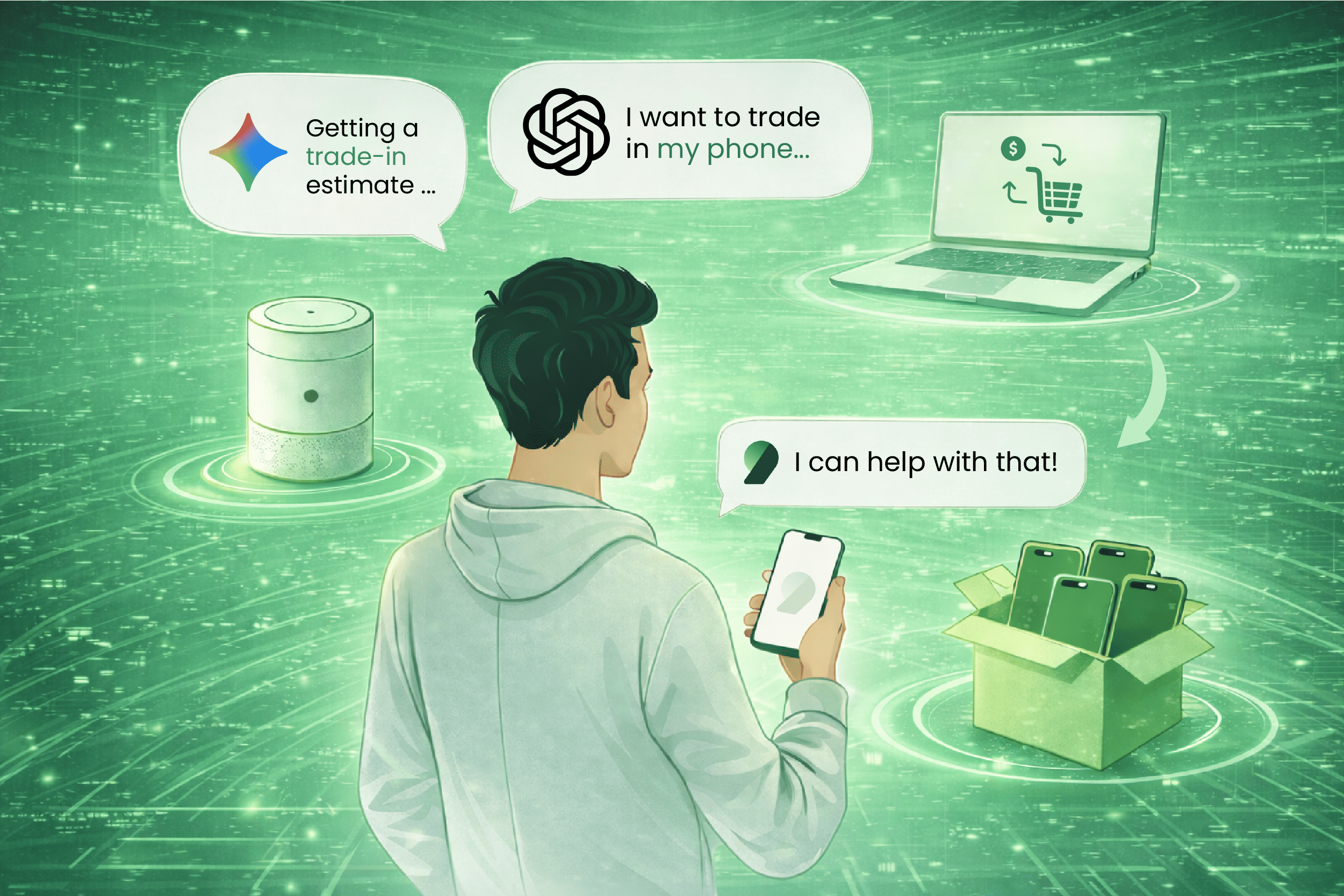
Our Claude experiment is just our first test. Our real bet is bigger:
Experiences that work everywhere, through any AI, without rebuilding the product each time.
This means:
- Trade-ins initiated via ChatGPT while shopping
- Instant store credit offers through Google Assistant during a search
- Voice-activated trade-in bookings via Alexa or Siri
- Direct integration into brand loyalty programs, all powered by conversational AI
Are Frontends Dead?
Not quite. But they're no longer the center of gravity.
Beautiful, intuitive interfaces still matter for brand identity, for certain complex workflows, for moments when visual design enhances understanding. But the assumption that every interaction must happen within a custom-built frontend? That's shifting fast.
The companies that will win in this new era are those that can deliver value wherever users already are, rather than demanding users come to them.
The SELLIT9 Vision: AI-Native Commerce
At SELLIT9, our platform turns used household items into instant liquidity, either as direct payouts or instant store credit, all while being flexible enough to work through any interface, any AI, any channel.
We believe the future of commerce is:
- Invisible: No new apps to learn
- Contextual: Available exactly when and where users need it
- Conversational: Powered by natural language, not navigation menus
- Universal: Working across platforms without custom rebuilds
Where Do You Stand?
We're curious to hear where others land on this.
Are we heading toward AI-first interfaces as the dominant paradigm? Or is traditional UI design still king?
One thing is certain: the landscape is changing fast. And the companies that adapt their infrastructure (not just their interfaces) will be the ones that thrive.
Want to see how AI-native commerce works in action? Learn more about SELLIT9's trade-in platform and how to trade in your items responsibly.